Fight, Flight, or Freeze — Releasing Organizational Trauma
Failover Conf · · Virtual


When humans are faced with a traumatic experience, our brains kick in with survival mechanisms. These mechanisms are the familiar fight or flight response, but can also include the freeze response - which occurs when we are terrified or feel that there is no chance of escape.
In this talk I will explain the background of fight, flight, and freeze, and how it applies to organizations. Based on my own experiences with post-traumatic stress (PTS), I will give examples and suggestions on how to identify your own organizational trauma and how to help heal it.
Sufferers of post-traumatic stress continue to feel these fight, flight, and freeze responses long after the trauma has passed, because our brains are unable to differentiate between the memory of trauma and an actually occurring event. When activated or triggered, the brain reverts to these behaviors, which are then expressed in the person’s body (through posture, disassociation, muscle tension, etc).
The same can occur to organizations - once an organization has experienced a trauma (a large outage, say) the “memory” of that trauma leads to a deregulated state whenever activated (by symptoms of similar indicators, such as system alerts, customer issues, and more). The organization will insist on revisiting the same fight, flight, or freeze response as the embedded trauma has caused, which, like a triggered post-traumatic stress sufferer, is a false equivalency.
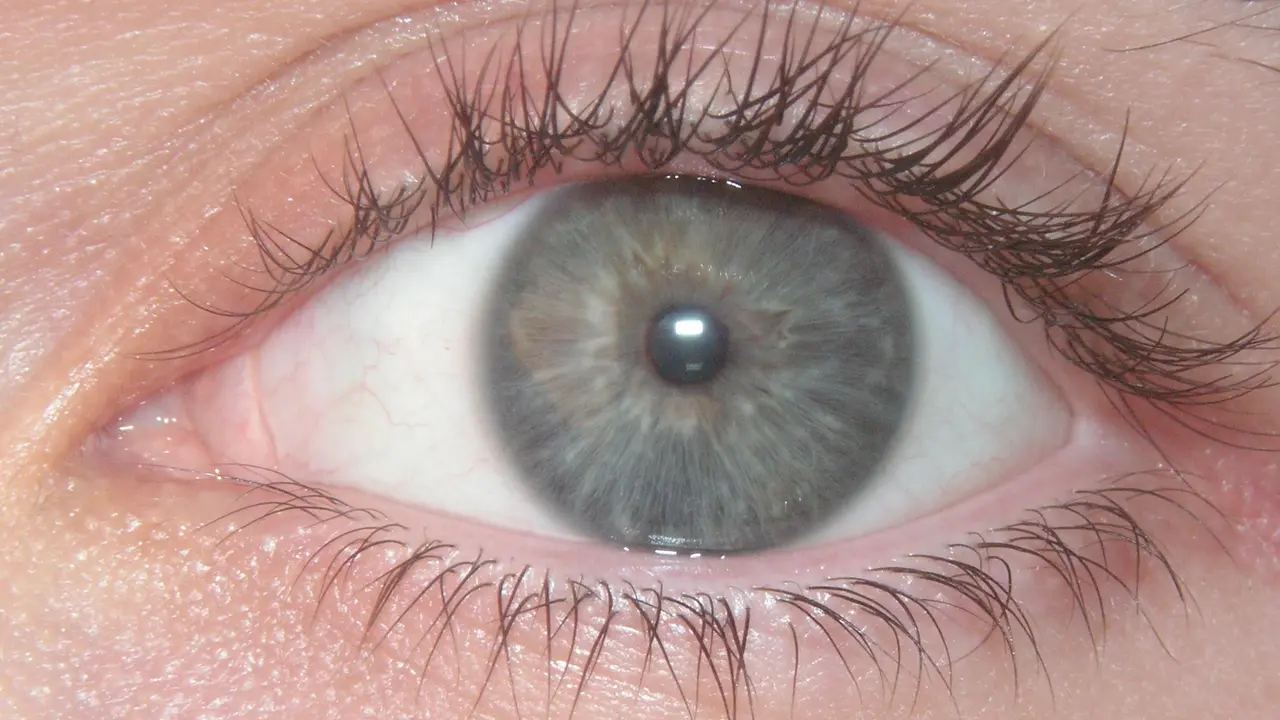
One of the treatments for post-traumatic stress is Eye Movement Desensitization and Reprocessing (EMDR), in which the patient’s difficult memories are offset with a positive association that is reinforced through external stimuli. The same can be done for organizations - removing the inaccurate traumatic associations of previous outages and organizational pain through game days, and other techniques, we can reduce the “scar tissue” of our organization and move forward in a balanced manner.
Resources
Transcript · 3,480 words · ~17 min read
Lightly edited for readability from the video’s captions. Download as text
Welcome to "Flight, Fight, or Freeze: Releasing Organizational Trauma." A couple of things before we get into it here. In this talk I will be talking about trauma and post-traumatic stress. I'm not going to be talking about any specific personal trauma experiences, but I do like to make sure folks are aware of that. That being said, disclaimer the second: I am a trauma survivor, but I am NOT a mental health professional. So nothing in here should be taken as professional mental or emotional health advice, but we're gonna see what we can learn about our organizations based upon how individuals respond and process trauma.
Quick little thing about myself. My name is Matt Stratton. I'm primarily known for my enjoyment of Diet Coke. I'm a transformation specialist at Red Hat, and according to Ryan Kitchens of Netflix, I have the best hair of any developer advocate. So those are my qualifications and I'm happy to debate this with anybody in the Slack afterwards — and by debate I mean talk about the merits of Diet Coke.
So let's think about this. Let's talk about zebras for a minute. Think about a zebra that's at rest, that has no threat of predators, and is operating within what we call the "rest and digest" function of the parasympathetic nervous system. He's just sort of chillin there, maybe eating some grass on the savanna, maybe thinking about making baby zebras — I don't know, we can't really see inside the actual thoughts of the zebra. But we have some ideas. It's rest and digest. It's just being a chill zebra.
So — have you ever had nightmares about incidents in the past? The zebra is about to get a nightmare. The zebra's being chased by a lion, and when this happens, drastic physiological changes occur with the activation of the fight-or-flight response of the sympathetic nervous system. The heart rate increases, breathing increases, large amounts of stress hormones like cortisol and adrenaline are released into the zebra's bloodstream, the pupils dilate, the blood pressure goes up, and any non-essential functions like digestion come to a stop. The zebra's nervous system is literally preparing for it to run for its life.
So what happens if the zebra gets caught? If the zebra gets caught, the nervous system becomes overwhelmed and it has no further solutions, and the zebra plays dead. This is the freeze response. This is also the point where we would consider the inflection of trauma. Zebra plays dead, lion drops the zebra, maybe goes to look for another one, goes off and is gonna come back to deal with its dinner later.
If this happens and the zebra survives the encounter, it gets up and what does it do? It literally shakes it off and it returns to a resting state.
Now, this next slide is maybe the most important thing you learn all day at Failover Conference — I hope you're ready. Here it is: humans are not zebras. The autonomic nervous system is common to all mammals, including that fight-or-flight response, but here's the thing — humans have this thing called a prefrontal cortex which zebras and lower mammals don't. This is usually an advantage. The prefrontal cortex is where executive function happens; that's where we can evaluate the difference between good and bad, same and different, understanding consequences. This is all because of having a prefrontal cortex. But the disadvantage is that we mentally replay traumatic scenarios and this activates our sympathetic nervous system exactly like an actual threat would.
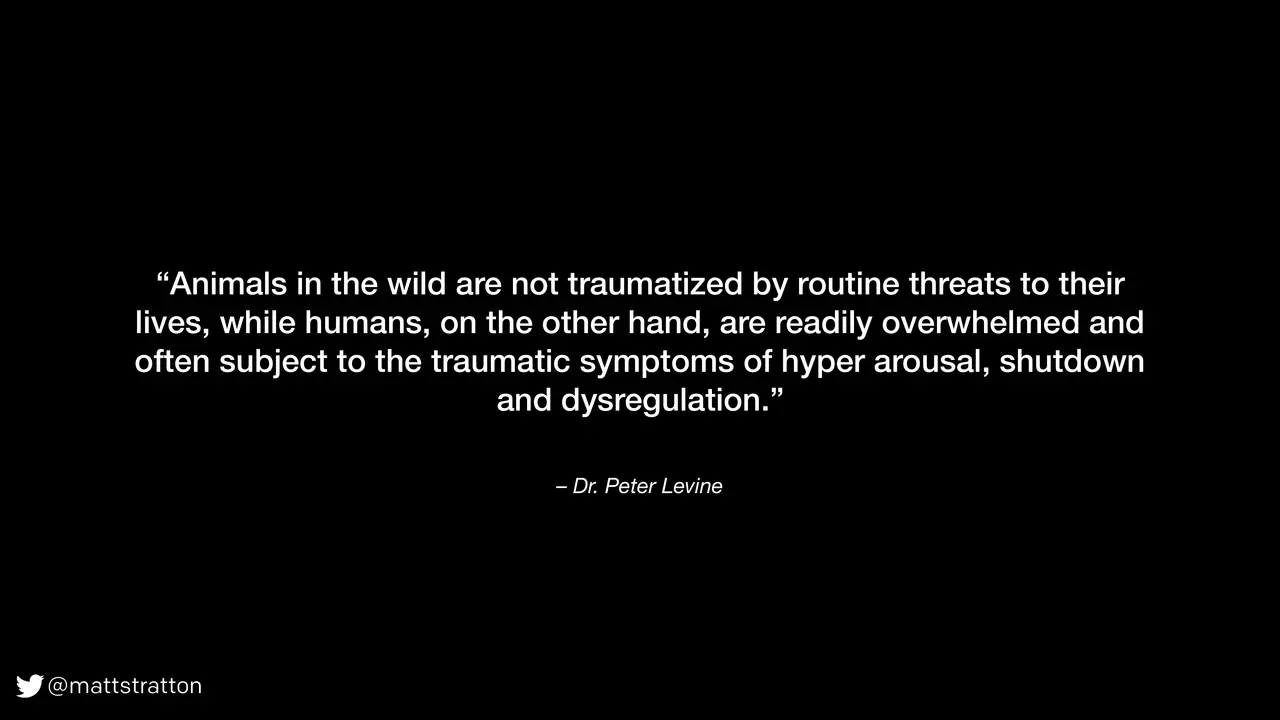
Dr. Peter Levine has done a lot of work around post-traumatic stress. Dr. Levine says animals in the wild aren't traumatized by routine threats to their lives, but humans are. We become overwhelmed and we're subject to symptoms around hyper-arousal, shutdown, and dysregulation. Again, we aren't zebras.
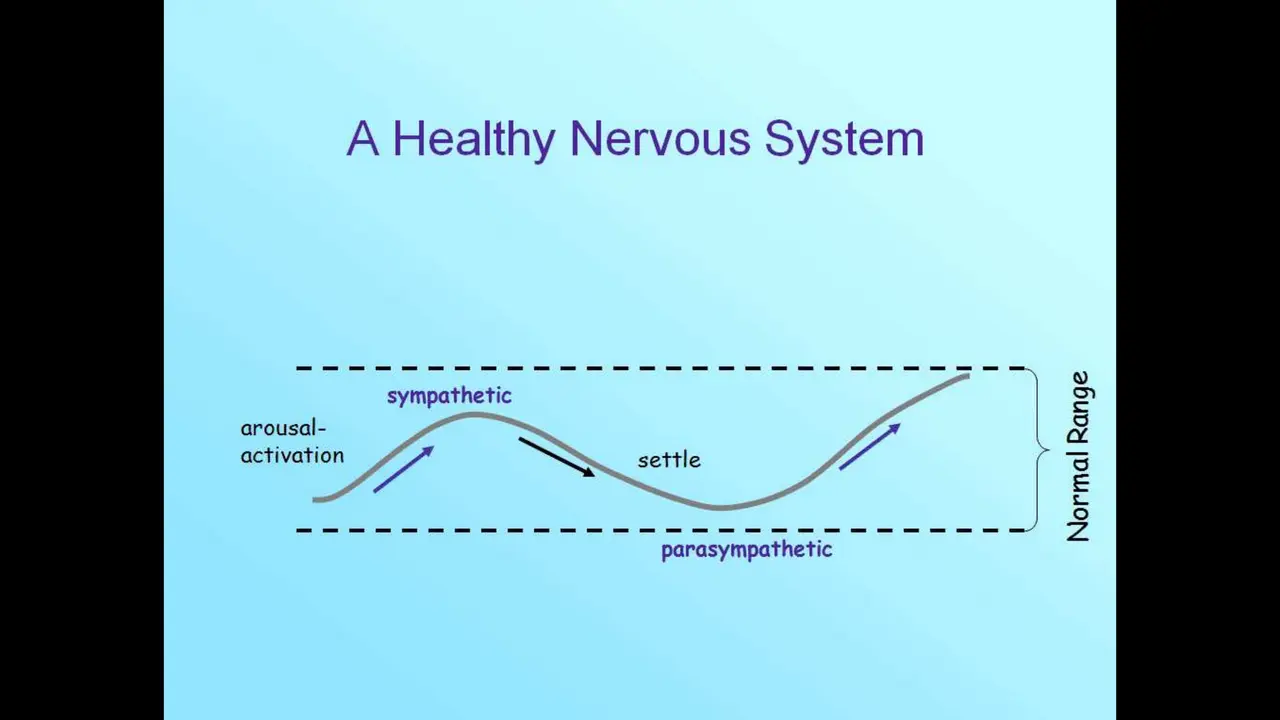
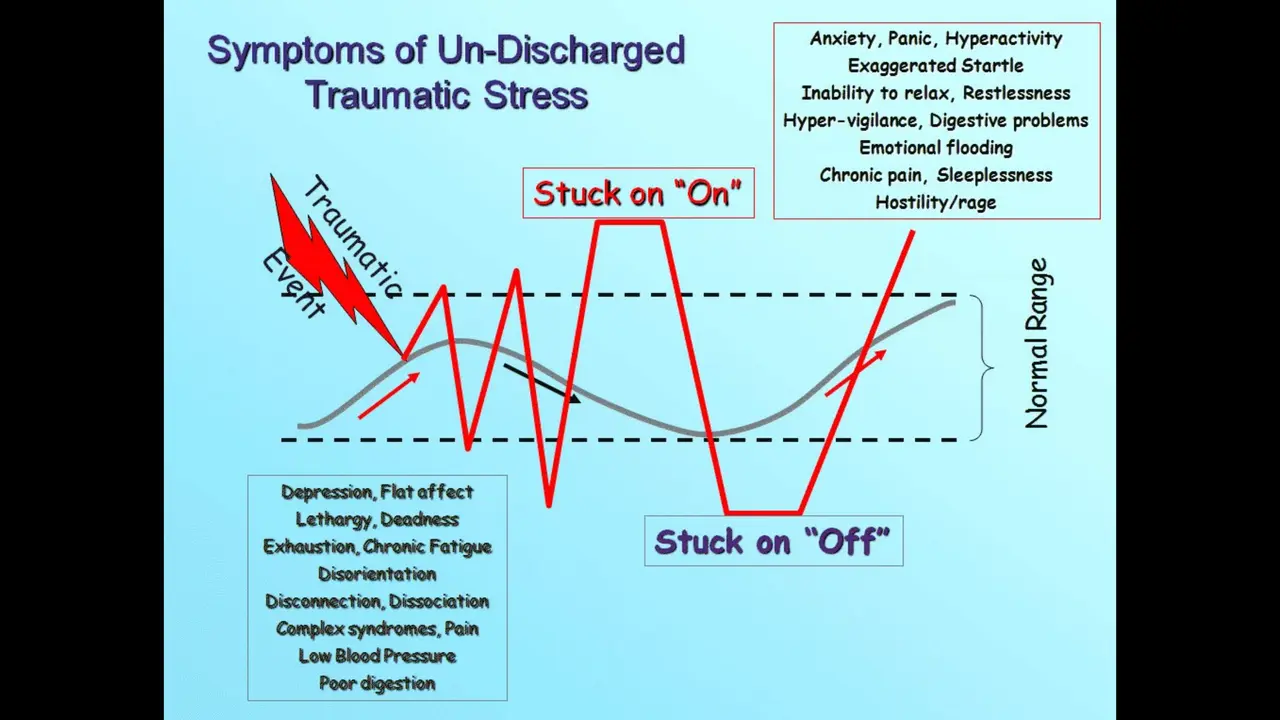
So if we think about a healthy nervous system, we go between these states constantly — and this is okay. We get activated, it kicks in our sympathetic nervous system, but then we settle and the parasympathetic comes back up. It's a nice even wave. We call this the "Window of Tolerance" — it's a zone of emotional arousal that is optimal for well-being and effective functioning. It's not a flat line; we want to activate these parts of our nervous system. The parasympathetic is the "rest and digest" side — it's what conserves energy, being chill zebras — whereas the sympathetic is the fight-or-flight response.
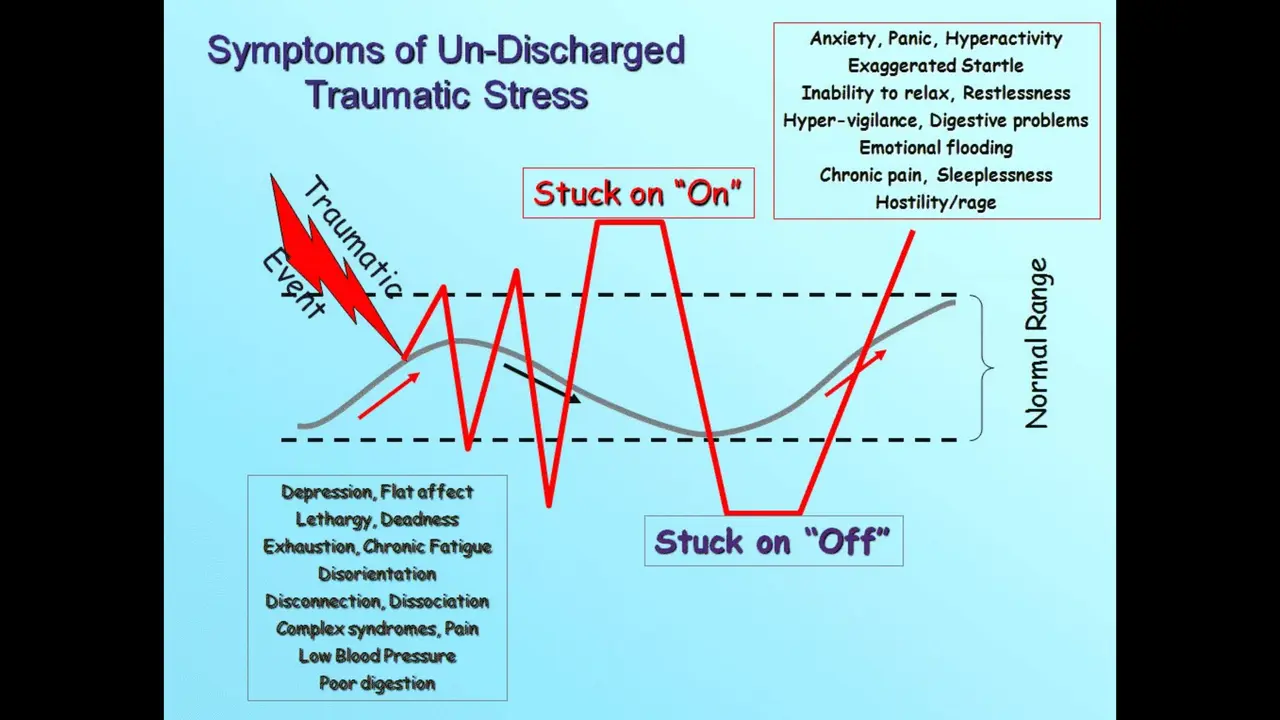
Now when we introduce a traumatic event, things change. We can flip back and forth very quickly, operating outside of either part of the Window of Tolerance — either too activated or stuck — or we can become stuck on or stuck off, where we don't come back. Symptoms of being stuck on include anxiety and panic, the inability to relax, hyper-vigilance, and digestive problems, because remember this is all connected. If we're stuck off, we see depression and lethargy, chronic fatigue, and again more digestive problems.
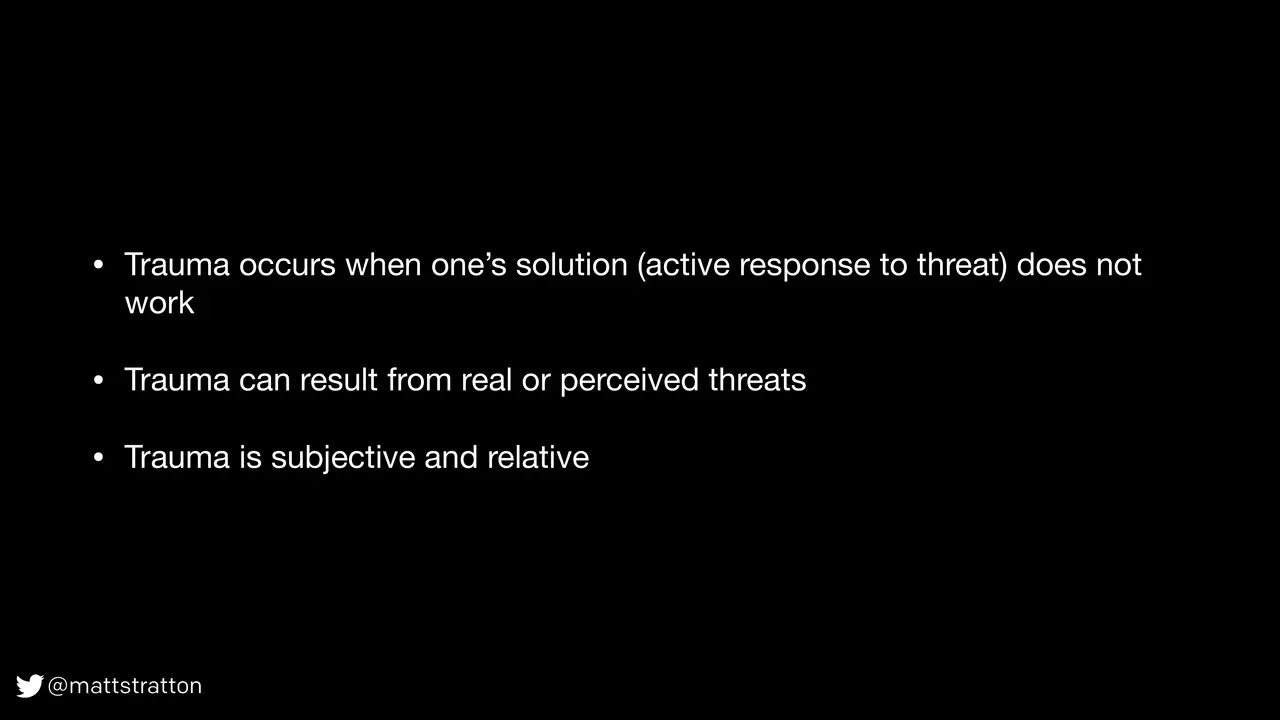
Here's the thing: trauma is not simple. We like simple things, we like things that are very straightforward, but the bad news is when it comes to trauma that's not true. The trauma occurs when your nervous system is overwhelmed — the active response to a threat just doesn't work. And the nervous system activation, like I said, is the same for real or imagined threats. Whether it's actually happening or you're remembering it or perceiving it, you can have the same activation. And what I perceive as overwhelming or beyond my capacity for a solution might be different than what you perceive as overwhelming. It's subjective and relative.
So how does this apply to our organizations, our companies, our teams? Because again, this is not a mental health talk. Let's go back and look at a dysregulated nervous system, and when we think about how this might apply to an organization: when a traumatic event occurs — and the point of this metaphor is that this traumatic event is an outage or a large incident, something of that nature — normally our organizations are operating in that Window of Tolerance. Something can happen, performance goes down, we kind of activate, we do some response, we deal with it, we handle it, we go back to rest and digest, we go back, we ship some features. But sometimes these incidents can have the same effect on an organization as trauma does on an individual.
So if organizations are hyper-aroused — stuck on — they might display effects of constant vigilance. Sounds like they're trying to fight Voldemort, right? There'll be hyperawareness of threats and that takes energy away from being able to move forward and innovate. These are organizations that are stuck on. A lot of times this can be reflected in how leadership approaches issues and outages — you see a lot of wartime metaphors. The other thing is production support teams are very common in organizations that are hyper-aroused, where you have people that are focused only on "fixing things" and responding, and it's a lot of misdirected energy.
Likewise, an organization could be stuck off in hypo-arousal, which is being stuck in the freeze. This is when you see innovation stagnating — the idea of "well, changes cause issues so let's not change." Analysis paralysis. Doing releases once a quarter because we need to be super-duper safe and we need to think about every possible thing that could possibly ever go wrong before we ship anything. Those are organizations that are hypo-aroused.
Keep in mind that signals may remind us of something that happened before. They may seem similar but it's not the same situation. We like pattern recognition as humans — it's part of that prefrontal cortex. We're looking for patterns, and signals may seem the same as previous lived experiences. For an organization we might say: "okay, we've seen this happen before, we've seen telemetry coming in, we've seen user behavior this way, and last time that happened it meant this" — and so that's gonna get us to respond the same way. But our systems are complex, y'all. It's not as simple as one signal indicating something that happened before.
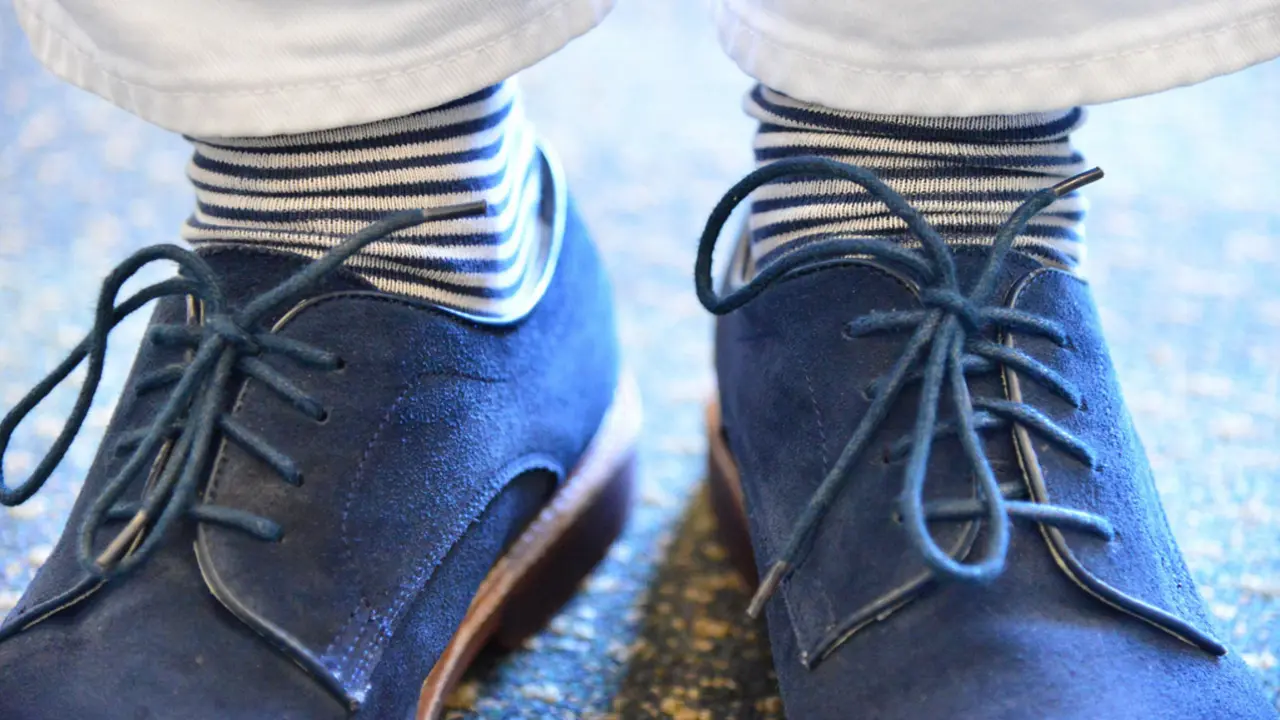
This is a part of the talk where in a non-virtual setting I'd say: how many of you flew on a plane to get here today? The answer is none of you, but a bunch of you have probably been on planes before. So let's think about how, at least in the U.S., we have to remove our shoes because of the TSA. In December 22, 2001, Richard Reid tried to ignite explosives hidden in his shoes on a flight from Paris to Miami. As a result of that, the TSA was like "whoa, people are trying to blow planes up with shoes," so they randomly started searching people's shoes. Then in 2006 the TSA mandated that all passengers must remove their shoes going through security. And then a few years later it's like, okay, or you could give us a hundred bucks and you don't have to anymore — but that's a different talk.
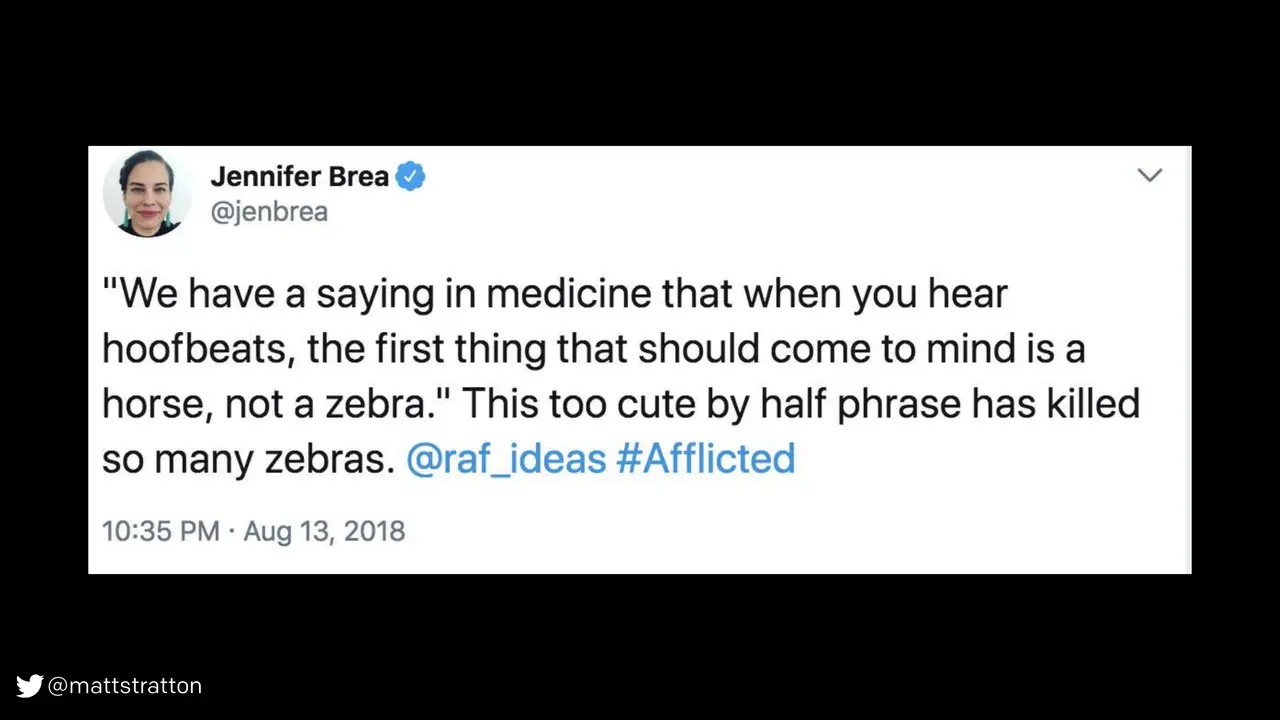
Again, we're looking at: we saw a signal which was "people wear shoes, therefore shoes are dangerous." I love this saying from Jennifer Davis: "There's a saying in medicine that when you hear hoofbeats, the first thing that comes to mind is a horse, not a zebra." I'm sure you've all heard that before — it's a very fun little saying that people like. But as Jennifer says, this cute phrase has killed many zebras. Just because most of the time it's a horse doesn't mean it's never a zebra, and it doesn't mean it's unlikely to be a zebra. This is like when we start looking for that singular root cause. And also, look at zebras again — there's a theme, it's a thing that's happening.
So what are the things we can do to understand our Window of Tolerance as an organization? We need to think about how we can identify when our team or our company or our org is becoming dysregulated. Take some time, think about those examples I was giving before — everyone's organization is a little bit different — take that mental exercise and say "how does my company respond? Are we stuck on? Are we stuck off?" Because understanding that is the first step.
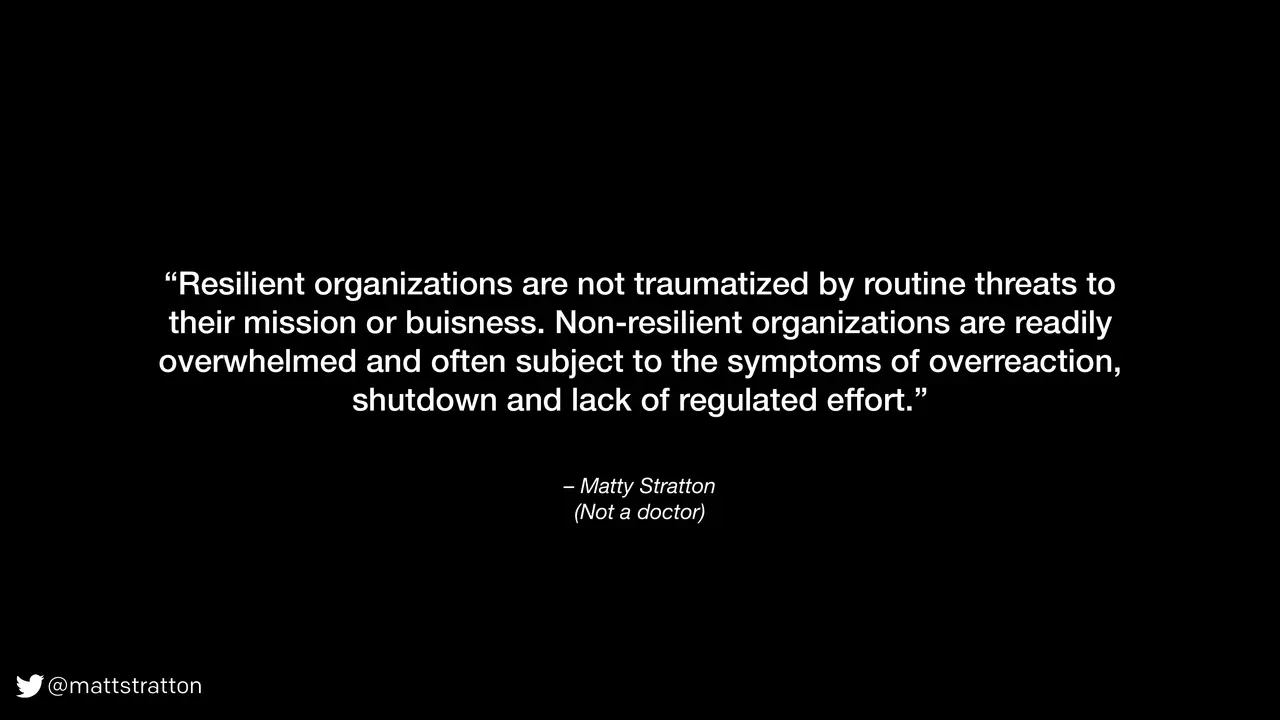
Similar to Dr. Levine's quote, here's another really important way to think about it: resilient organizations are not traumatized by routine threats to their mission or business, whereas non-resilient organizations are readily overwhelmed and they're often subject to symptoms of overreaction, shutdown, and a lack of regulated effort. That quote comes from me, but I'm not a doctor — and yes, I did just quote myself in my own talk.
So we've got to think about how to regulate — and no, this is not a reference to Warren G, but it should be. How do we take this dysregulated state and become more regulated?
In individual post-traumatic stress there is a type of alternative therapy called somatic experiencing. This is aimed at relieving the symptoms of post-traumatic stress and other mental and physical trauma-related health problems by focusing on perceived body sensations. This was created by Dr. Peter Levine, so you see how this all comes together. In somatic experiencing, "somatic" means body. We're going body first, leading with the physical sensations, and then making connections to how we respond to the memories and triggers of trauma.
When we think about organizational somatic experiencing, what we're trying to do is create a similar focus on the response — to train ourselves to have the reactions we would like to have when one of these traumatic experiences happens to our organization. And I know this is a controversial thing — you are at Failover Con — but come along with me, there's a connection.
In somatic, it means body first. We don't start with the mind; it's not top-down talk therapy. If we start with the mind and try to look for a "root cause" during an incident, we are focused on the symptoms at that point and that makes us look for the wrong patterns. And again, there is no real singular root cause — well, there is one, and you know what it is: it's the Big Bang. We instead want to talk about contributing factors, because there are multiple contributing factors that led to the situation. Our systems are complex, y'all.
Game days are awesome. We want to make an association with outages and issues as being a safe, business-as-usual thing that's no big deal. Game days can really help us do that. They're a great way to reiterate the feeling that we want to associate with an incident, but they have to be done properly. They need to be low stress and they need to be safe. The point of a game day is not to practice under pressure but to associate response with a safe environment.
At an organization I used to work for, someone came up to say: "When we run a failure exercise, the participants should not know the thing we're testing because otherwise it's not a good test of their ability to troubleshoot." And I said no — the point of a game day is not to practice troubleshooting. The point is to practice our incident response process and mechanisms and create a psychophysiological response of calm, so that when it really happens, we're leading with the body. You don't need to practice putting your people under pressure — they're getting plenty of that already.
So if we're doing exploring in a game day there has to be some guidance and structure around it. It's kind of like meditation with some kinds of trauma: meditation is helpful, but what can happen if it's not guided is that people go into their inner landscape and encounter their trauma and don't know what to do. They might be overwhelmed by it or go around it because they don't have the guidance. Similarly, if we don't have real plans in place for our game day exercises, we might get wound around the axle on things that are irrelevant to what we're trying to do. And the other thing: in meditation for trauma, we can get what Dr. Levine calls "bliss bypass" — a way of avoiding the trauma. Similarly, if our game day is not following our usual rules, we made it a little too "safe."
So if you run failure injection in a game day, you need to run it like a real incident. I used to work at PagerDuty and we would run these things called Failure Fridays. I mean, they still do — now they might be any day, but Failure Friday is awesome for alliteration. A failure injection exercise — a Failure Friday at PagerDuty — follows the full incident commander process. In fact, it's actually how incident commanders get trained at PagerDuty. What happens is this creates an organizational association of a safe place for incidents. If we're doing this every Friday as just a normal thing we do, following that process — when we go into that process at 2:00 a.m. when everything's on the line, we have that nice physiological response.
This is another reason why you should always run all your incidents at their initial severity. Even if you start them and realize they weren't an incident or weren't a sev-one, still run them through for the full course. That doesn't mean you don't lower their severity during the incident; that's fine. But run them using that process, because it's continually saying that when we do this incident response process, this is just normal, this is just business as usual. It's not an isolated event.
And blamelessness is just the beginning. We need to process the failure and the outage through all the information that we have, and that processing has to have a conclusion — otherwise it's fundamentally unprocessed trauma. There's this misconception that processed trauma is just to "get it all out," but that's not enough. It's not enough to just experience it and talk about it; you need to integrate those experiences into a coherent whole. That includes telling our stories as well as changing our autonomic nervous systems, which in the case of an organization is how we respond to incidents and outages.
It's really important to tell our stories — that's how we process them. This happens for individuals but also for organizations. Our post-mortems need to be shared, and it's not just enough to dump a doc into Google Drive somewhere and email it out. This storytelling is something to experience and hear, and the sharing of them is super important. Write-only post-mortems don't help anyone.
Jay Paul Rudy Reed, who will be wrapping things up for us today, has done research and found interestingly that the larger the organization, the less likely teams were to share their post-mortems with each other. The irony being that the larger the organization, the more important you could make the argument is for them to share. You don't know what you don't know, and you don't know what's gonna be interesting or something you can learn from.
I like to wrap up by talking about some cognitive distortions and how they apply to how we approach reliability and resiliency in our sociotechnical systems. Cognitive distortions are exactly what their name implies: they're distortions in our cognition. They're perspectives with bias, irrational thoughts and beliefs that we unknowingly reinforce over time. They're often subtle — it can be kind of hard to see we're doing them when they're part of a regular feature of our day-to-day work.
There are generally accepted to be 16 different types of cognitive distortions. I'm not gonna go through all of them, but I'm gonna talk about a couple that might be causing issues for your team and your organization.
The first one is polarized thinking, also known as all-or-nothing thinking: seeing everything in extremes. Everything is great or everything is terrible. It's either perfection or total failure. Remember, our systems are always in some state of degradation. We don't have perfection; things aren't always up or always down.
Then there's over-generalization, where we take a single instance and generalize it into being an overall pattern. On a personal level this might be "well, I got a C on that test so I guess I'm stupid." In an organization it could be "we had a sev-one on that service so it's clearly unstable and probably the worst thing we've ever created."
When we combine this with another distortion called the mental filter, this manifests as seeing only the negative and eliminating all positives about a situation, a person, or a system. Remember, our systems are up more often than they're down. If you had a system that was down literally all the time, you wouldn't actually have a service.
Fortune-telling: we do this a lot in tech. We feel that if we have data that will be predictive — ooh, machine learning — that if we only know enough we can predict the future. I'm sorry to tell you that no, you cannot. Yes, we can start getting ideas on what is likely to happen, but again our systems are complex and the people that make them up are complex. We need to understand that our predictions are not fact, but actually just one of several possible outcomes.
Control fallacy manifests as one of two beliefs: either that we have no control over our lives and we are helpless victims of fate, or that we're in complete control of ourselves and our surroundings, giving us the responsibility for the feelings of those around us. Both feelings are equally damaging and both are equally inaccurate. No one is in complete control over what happens to them, and no one has absolutely no control over their situation. This can manifest in tech as either "management is just always making these terrible decisions, I've got no control, everything just sucks" — or, coming from a sysadmin background, "if we only could control these developers then everything would be great." Control fallacy.
To bring it back to Dr. Levine: being resilient means that we don't see things from the perspective of things that happen to us — it's a matter of what we can do going forward. A culture of blame creates a culture of helplessness.
These slides and a bunch of other links about somatic experiencing and all sorts of back-up material are available at speaking.mattstratton.com. It's been my pleasure to share this with you today and I look forward to answering any questions or just talking about this in the Slack. Thanks so much, everybody.